The sole length of ski boots plays a much bigger role than many people think. It determines how well the binding, ski and body can work together. When sole length, canting and fit harmonise perfectly, you benefit from safety, comfort and maximum control. The ski boot is more than just a shell with buckles: It transfers every movement directly to the ski. But for this to work well, everything has to be precisely harmonised.
What is the sole length of ski boots?
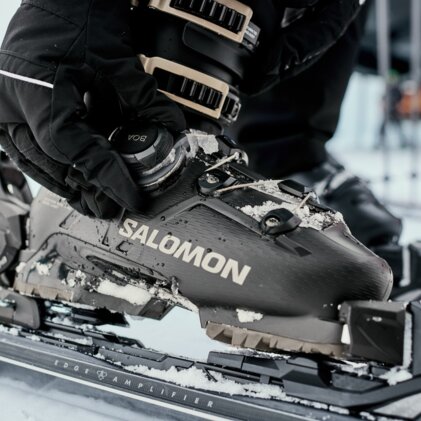
The sole length indicates the outer length of the boot sole in millimetres. It is usually a three-digit number in the heel area (e.g. 305 mm) and is often confused with the boot size. However, it does not describe how big your foot is, but rather how long the outside of the shoe is.
What is the sole length of ski boots needed for?
The sole length plays a role in the adjustment of your binding. The goal is to achieve a perfect match between the centre marking of the ski boot and the mounting point on the ski for a balanced skiing experience.
Influence of the sole length when skiing:
- It ensures that the binding releases at the right moment.
- It determines how precisely your ski reacts and can be steered.
- It has a direct impact on comfort, power transmission and safety.
Many ski boots also have a small mark in the centre of the boot, usually a line or arrow on the sole. This serves as a reference point for the service technician when installing the binding or checking the mounting point on the ski.
Why is the sole length of the ski boots so important?
It is crucial when adjusting the bindings and the associated release values (Z or Din value) so that they release the ski at the right moment and prevent injuries. If they do so too early or too late in the event of a fall, this can be unpleasant or even dangerous.
That's why our experienced winter sports experts at over 800 INTERSPORT Rent locations worldwide adjust your ski bindings precisely for you at every rental.
Our RENTertainers take this into account:
- Sole length & binding
- Your body weight
- Your individual skiing ability
How does the sole length of the ski boots relate to the boot size?
Two ski boots of the same boot size can have different sole lengths (e.g. size 42: model A = 305 mm, model B = 310 mm). Conversely, one sole length can cover several sizes. This is because many manufacturers use the same outer shoe frame for two consecutive sizes and only change the inner shoe or the insole.
Recommendation from our RENTertainers
In the ski boot manufacturers' size charts, you will see that there are various models with different sole lengths for each boot size. If you bring your own ski boots to the rental shop or change the model, you should always have the new sole length checked. Even small differences can affect the release of the binding.
Our tip:
- Buy or rent skis and boots together: Some binding systems can only be adjusted to a limited extent, ski touring bindings often only very little.
- For older or used models: If the value is no longer easily recognisable, grab a tape measure and measure it yourself (boot toe to heel edge).
- Important: Worn soles can change the measurement result.
About the optimum size of your ski boots

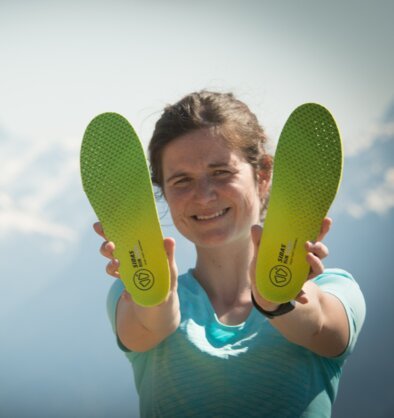
As already mentioned, the sole length of the ski boots is not related to the size. When buying, you should therefore focus primarily on the inner dimensions. As a general rule, you should choose a ski boot that is smaller rather than too big. Why? Because the padding on the inside usually affects the dimensions by up to half a size.
Looking for a size guide?
In the magazine article on the ideal ski boot size, weight and fit, you can find out which factors to consider when buying.
Read more about size & fit now!
What does "canting" mean for ski boots?
Have you ever heard of ski boot canting? This refers to the lateral inclination of the footwear, i.e. the angle between the shell and the leg section of the ski boot.
With knock knees or bow legs, the leg axis is tilted slightly inward or outward. This means that one edge of the ski puts more force on the surface than the other. This causes uncomfortable pressure in the boot. After realigning the cant, the stance in the boot changes to a flatter, straighter position for improved control and a more comfortable skiing experience.
When is a canting adjustment useful?
- If you have the feeling that one ski grips more strongly than others.
- If your knees are not parallel to the front.
- If you get pressure points on your shins or ankles.
- After a shin fracture.
The experts at the INTERSPORT Rent shop can adjust the canting with millimetre precision using side screws. A RENTertainer analyses your natural stance and adjusts the leg axis so that you don't tilt in or out.
Frequently asked questions about the sole length of ski boots
When should I have my ski bindings checked?
Always have your bindings checked when you get new skis or boots. It's also a good idea to have your setup checked after a fall or if you feel uncomfortable on your skis. If the soles of your ski boots are very worn, it doesn't hurt to have them checked. If you haven't skied in a while, have your bindings checked not only for possible material fatigue, but also if your weight or skiing style has changed.
Can I adjust the canting myself?
We advise against this. Your natural leg axis is measured for precise canting adjustment. Just a few millimetres can make a difference. Our RENTertainers have professional equipment for this and, thanks to their experience, provide expert advice on all aspects of ski boots.
How do I realise when my canting doesn't fit?
You feel you have to constantly "work against an edge" to straighten your skis. This manifests itself as constant re-correcting instead of relaxed gliding. Typical symptoms are pressure points on the shins or ankles or faster fatigue of the leg and hip muscles due to constant counter-work. The track often becomes unsteady or a ski "bites" earlier.
What are the benefits of boot fitting in addition to canting?
With boot fitting, the entire ski boot is customised to your foot. This not only affects the shaft angle, but also the shape of the shell, the inner boot and the padding. Together with a precise canting adjustment, this ensures an optimum fit, fewer pressure points and even power transmission. This means you get a better feeling for your skis and are more stable and comfortable on your skis all day long.
INTERSPORT Rent tip
The RENTertainer recommends
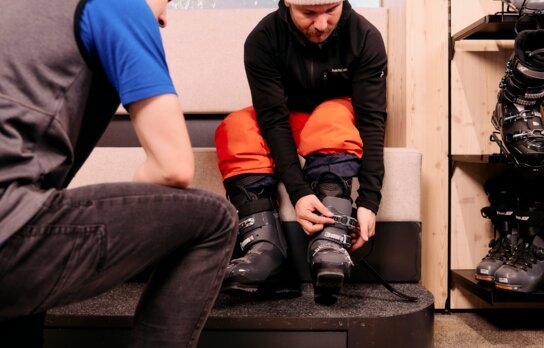
If you rent your ski boots from one of over 800 INTERSPORT Rent shops worldwide, the sole length is automatically measured and the binding is adjusted to fit exactly. You can also get advice on canting and boot fitting. This will not only make you more comfortable, but also more efficient on your skis and get more out of your skiing style.
Of course, our RENTertainers will not only advise you on the sole length of your ski boots, but also on skis, ski clothing and pretty much every other type of winter sports equipment.
Related articles
You may also be interested in: