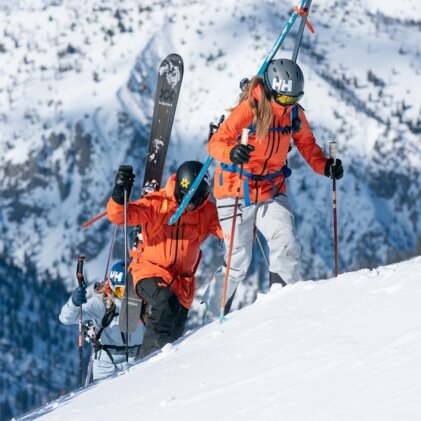
Targeted muscle training for skiing is the best way to start the winter season stronger, more stable and more relaxed. With exercises for your legs, torso and endurance, you can get more out of your skiing day, whether on the slope, in the backcountry or on a ski tour. If you don't want to risk wobbly legs and sore muscles for days, it's worth preparing your body accordingly.
Together with the winter sports experts at Rossignol, we have put together the best exercises, from classic ski gymnastics to endurance sessions in the great outdoors. Ready for your ski workout?
Start the winter season in good shape: Which muscles should you train in particular?
Skiing involves many muscle groups working together. The thighs are especially challenged. That's why muscle training for skiing should focus primarily on this area:
- Quadriceps (front of the thighs)
- Hamstrings (back thigh muscles)
- Adductors (inner thighs)
- Glutes (gluteal muscles for stability and pressure)
- Core (abdominal and core muscles for posture and balance)
These muscle groups enable controlled turns, stable edge pressure and quick reactions in changing terrain. Strong legs and a stable core are the basis for getting through the day well, whether on the slope, freeriding or with touring skis.
Easy exercises to do at home: your compact ski workout
With the following exercises, you can start training for skiing at any time without any equipment.
... for thighs and buttocks
Your thighs and buttocks are your power centres when skiing. They stabilise your position, generate the necessary pressure on the edges and enable powerful, controlled turns.
Squats
Squats are one of the most effective exercises in the entire training programme for skiing, as they strengthen the entire leg muscles.
Here's how to do it right:
- Place your feet shoulder-width apart.
- Tighten your stomach and keep your back straight.
- Go as low as possible while remaining stable. Make sure your knees do not rise above the tips of your toes.
- Then push yourself back up from the squat to a standing position in a controlled manner.
Tip: For more intensity, you can jump slightly as you move up (squat jumps). This will also activate your calves, glutes and speed.
Lunges
They belong in every ski gymnastics workout plan. They train the legs, buttocks and balance.
Here's how to do it properly:
- Stand upright, feet hip-width apart
- Take a big step forward with one leg.
- Lower yourself down in a controlled manner until your front thigh is approximately parallel to the floor and your front knee is over your foot. It should be at about a 90-degree angle.
- The back knee moves towards the floor but remains in the air.
- Keep your upper body stable and your stomach tensed.
- Using the heel of the front leg, push yourself back to a standing position.
This exercise prepares you optimally for changing terrain.
... for the quadriceps
The quadriceps on the front of your thighs take the brunt of the weight when you ski downhill. It keeps you stable in the typical skiing position and controls every turn. Targeted training of this muscle group can help prevent fatigue and give you more confidence on the slopes.
Chair exercise on the wall (wall sit)
This exercise simulates the static load in the downhill position and is another essential element of muscle training for skiing.
This is how it works:
- Lean with your back against a wall.
- Slowly slide down until your knees are at a 90-degree angle.
- Your thighs are parallel to the floor.
- Keep your back straight and pressed against the wall.
- Hold this position without using your hands for support.
- Continue to breathe calmly.
- When your thighs start to burn, slowly move back up.
This static load is pure strength training for skiing. The longer you hold your weight the closer you get to the load you need for long descents.
Jump rope
Jumping rope adds dynamism to your leg workouts for skiing. It improves your strength, endurance and coordination.
This is how you start:
- Hold the rope loosely in your hands.
- Jump over the rope with both legs - small jumps are enough.
- Stay upright and keep your abdominal muscles active.
- Later, switch to one-legged or alternating steps.
... for your balance
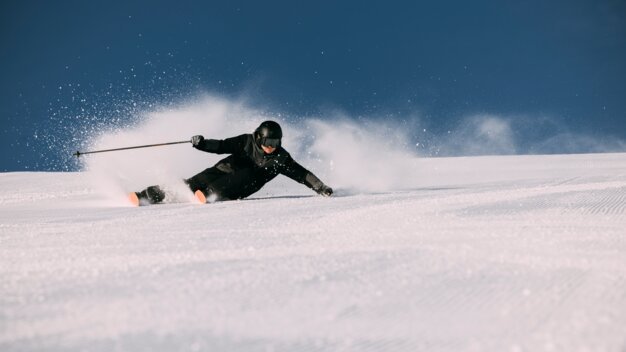
Balance is one of the most important skills in skiing. A stable stance determines how well you can build up pressure, hold edges or compensate for unevenness.
One-legged stance
This exercise is perfect for strengthening your deep muscles and stability.
Here's how to do it:
- Stand up straight.
- Raise one knee to hip height.
- Keep your standing leg slightly bent.
- Tighten your abs and buttocks to keep your pelvis stable.
- Keep your balance for as long as possible.
Extra challenge: Why not try this exercise with your eyes closed?
...for your body centre (core)
A strong core is essential for skiing. It stabilises your upper body, takes the strain off your knees and ensures that you transfer power efficiently to your skis.
Plank
The plank is one of the best exercises for strengthening your entire core muscles and is therefore perfect for preparing for winter sports.
Here's how to do it right:
- Stand on all fours.
- Support yourself on your forearms with your elbows under your shoulders.
- Stretch your legs out behind you and stand on your toes.
- Your body forms a straight line from head to toe - no hollow back, no butt in the air!
- Actively engage your abdomen and buttocks.
- Hold this position and continue to breathe calmly.
- Start with 20-30 seconds and increase over time.
Pro tip: For more intensity, you can alternate between slightly lifting one leg or switching to a side plank. This will also trains your lateral core muscles, which you need for dynamic turns.
Mountain climbers
This dynamic alternative combines core strength with endurance and coordination, making it ideal for skiing.
Here's how it works:
- Start with hands under shoulders in push-up position.
- Your body forms a straight line.
- Alternate pulling your right and left knee towards your chest.
- Keep your core stable and your pelvis still.
- Gradually increase the speed.
- Start with 20-30 seconds and then pause briefly.
... for muscle relaxation
Good muscle training for skiing not only increases strength, but also flexibility. Regular stretching also helps you to stay relaxed after training and prevent injuries.
Stretch the back of the leg
- Place the heel of one leg on a chair or bench.
- The other leg remains straight.
- Lean forwards with your back straight until you feel a distinct stretch in the back of your leg.
- Hold the position for 20-30 seconds.
- Then change sides.
Fitness training in the fresh air
The perfect complement to your weight training? Cardio training in the fresh air! This will strengthen your heart, circulation and oxygen uptake so that you don't get out of breath on a day of skiing.
Cycling & mountain biking
Cycling gives your cardiovascular system a good boost and stimulates your metabolism. Many people find it easier to get started than running. You also train your arm, back and core muscles, especially on a mountain or gravel bike.
Running & trail running
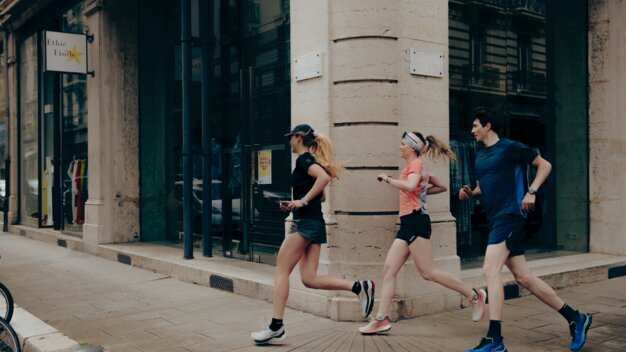
Running is the ultimate endurance sport. Trail running also improves your balance and depth perception. It strengthens the stabilising foot and ankle muscles, promotes flexibility, and builds the deep thigh, abdominal, and lumbar muscles.
Nordic walking & hiking
Hiking and Nordic walking provide moderate aerobic exercise that is easy on the joints and increases endurance and oxygenation.
If you are still looking for the right equipment or outfit for your favourite sport, the outdoor experts at Rossignol have great products not only for skiers and snowboarders, but also for other outdoor activities such as those mentioned above! How about a Rossignol windstopper jacket for hikers or a trail running shoe for off-road fans?
Train with the "On Piste" app from Rossignol
Rossignol's "On Piste" multisport app accompanies you throughout your preparation for skiing:
- Track activities such as biking, hiking, running or Nordic walking.
- Record elevation, distance, and times.
- Make training successes visible.
- Discover an impressive variety of guided tours.
- Be motivated by the lively community.
Our tip: "On Piste" is also a helpful app if you are just starting out with a new sport. Follow your friends and other athletes, go on a guided bike tour or simply let yourself be inspired!
Frequently asked questions about muscle training for skiing
What are the best leg exercises for skiing?
Some effective exercises include squats, lunges, forearm raises, chair exercises, and jumping rope, all of which train the very muscles you need for stability and endurance on the slopes. Best of all, you don't need expensive equipment, just your own body.
Are ski gymnastics exercises enough?
Ski gymnastics is a strong foundation, but it is not enough on its own. For optimal preparation, combine it with cardio training. A mix of targeted leg and core strength training and endurance activities such as cycling, running, or hiking is most effective.
How often should I train for the ski season?
Two to three training sessions per week are ideal. Above all, make sure you alternate between strength training, balance exercises and outdoor cardio (endurance). This is the most effective way to train your muscles for skiing.
Does endurance training really help with skiing?
Yes, good stamina means more control, less fatigue, and longer, safer skiing days. Cycling, running, hiking, and trail running, for example, are perfect complements to ski gymnastics.
How important is balance training for skiing?
Very important! Your balance determines how cleanly you hold edges, how quickly you react to bumps and how stable you are in every turn. The best thing about it: Just 1-2 minutes of standing on one leg every day will show noticeable progress on the slopes - without spending a lot of time, but with a clear effect.
What is the role of core training (body centre exercises) in skiing?
Core stability is especially important when skiing. A strong core takes the strain off your knees and back and improves your power transfer to the skis. That's why core exercises are a part of any muscular training program for skiing.
INTERSPORT Rent tip
The RENTertainer recommends
Looking forward to your first day of skiing this season? INTERSPORT Rent offers a wide range of rental products, whether alpine skis, touring skis, cross-country skis or freeride gear. If you want to be fully equipped with high quality, state-of-the-art models, you are guaranteed to find the right things for your adventures in the snow at one of over 800 locations worldwide.
Related articles
You may also be interested in: